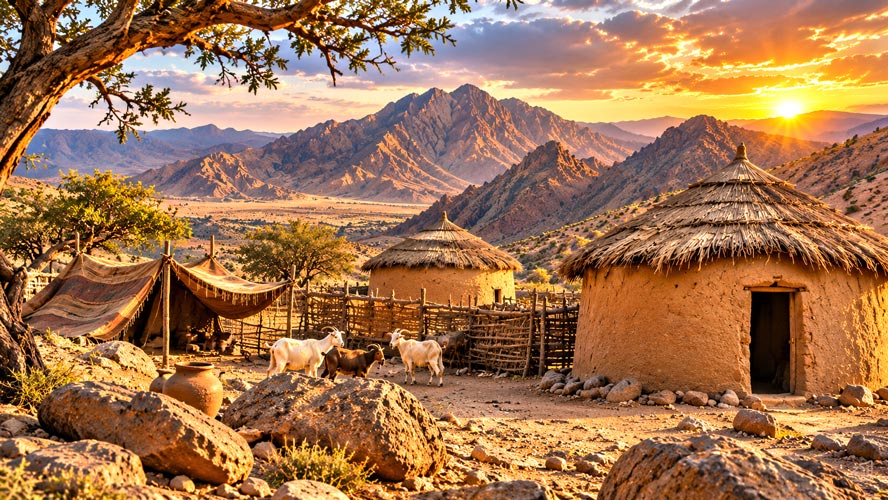
Around 1500 BC, Midian was a rugged land of mountains, rocky valleys and vast desert plains, stretching across parts of what are now northwestern Saudi Arabia and the surrounding region.
Life was governed by the seasons, the availability of water and the movement of livestock. For the nomadic families who called Midian home, survival depended upon knowing the land intimately.
Goats and sheep provided milk, meat, hides and wool. Families travelled between grazing grounds, sometimes spending days away from their settlements. Wells and natural springs were precious, and knowledge of their locations could mean the difference between life and death.
Homes were simple. Some families lived in tents woven from animal hair, while more settled communities built modest dwellings from mud and other locally available materials.
Midian was not entirely isolated. Ancient trade routes connected its people with Egypt, the Levant and Arabia, bringing goods, travellers and stories from distant lands.
It was a demanding existence, but one shaped by family, hospitality, independence and an extraordinary understanding of nature.
This was the world of Jethro, the Midianite priest whose life would become entwined with that of Moses, one of history’s most enduring biblical figures.
Check Wayne’s first book on Amazon
RIGHT HERE